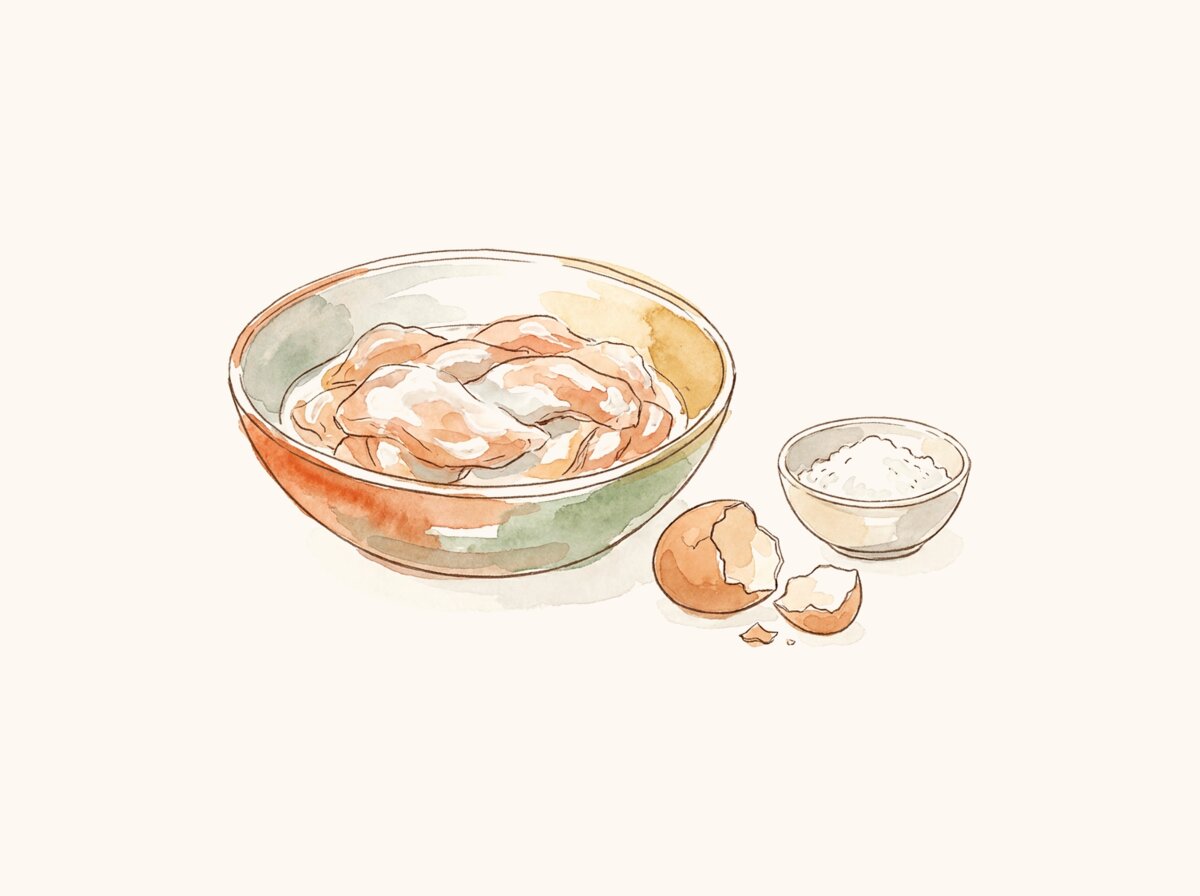
Velveting
Why their chicken is silkier than yours.
Meat in a good stir-fry is tender in a way home stir-fry never is: soft, slippery, faintly bouncy, still juicy after a pan hot enough to smoke. That's velveting, and it's two cheap pantry tricks stacked on top of each other.
Why it works
Alkali stops the proteins wringing out their water; a starch coat shields them from the heat.
Raise meat's pH with a pinch of bicarbonate of soda and its proteins carry more like charges, so they repel each other instead of clenching as they cook. Less clenching, less water squeezed out, and most of what we call tenderness is water that stayed put. The second half is armour: cornflour and egg white set into a thin gel that takes the heat and holds moisture against the surface. Then comes a gentle pre-cook, thirty seconds in barely-simmering water or a pass through 120 °C oil, so the meat hits the wok four-fifths done and needs only seconds of violence.
The same pinch works on minced beef. Fifteen minutes with a quarter teaspoon per 250 g and it browns faster and stays juicier. That's why it's in half the smash-burger recipes online.
The moves
- 1
Slice thin, across the grain
About 3 mm, cut against the fibres. Velveting makes tender meat remarkable, but it can't rescue a slab cut the wrong way.
- 2
Alkali, briefly, then rinse
A quarter teaspoon of bicarbonate of soda per 250 g of chicken or beef, tossed through, 15 to 20 minutes. Then rinse it off properly. Longer or stronger turns the texture spongy and leaves a soapy tang.
- 3
Build the coat
Per 250 g: a tablespoon of cornflour, a tablespoon of egg white, a teaspoon of Shaoxing wine or dry sherry, a splash of soy, and a teaspoon of oil last. Toss until it stops feeling wet and starts feeling slippery.
- 4
Rest it cold
Half an hour in the fridge lets the starch hydrate and grip. The pieces then separate cleanly in the pot instead of arriving as one grey brick.
- 5
Pre-cook gently, finish hot
Slide it into barely-simmering water or 120 °C oil, stir to separate, lift it out at around 80% done. What happens in the wok after that takes seconds.
Save yourself
Leaving the bicarb on for an hour to be thorough
Past about twenty minutes the texture crosses from tender into mushy and picks up a metallic edge. Set a timer, then rinse.
Skipping the rinse
Unrinsed bicarb tastes exactly like bicarb. A cold rinse and a firm pat dry costs nothing and saves the dish.
Dropping the coated meat straight into a screaming wok
The starch scorches long before the inside is done. Water or warm oil first, high heat second.
Pop quiz
What's the pinch of bicarbonate of soda actually doing?