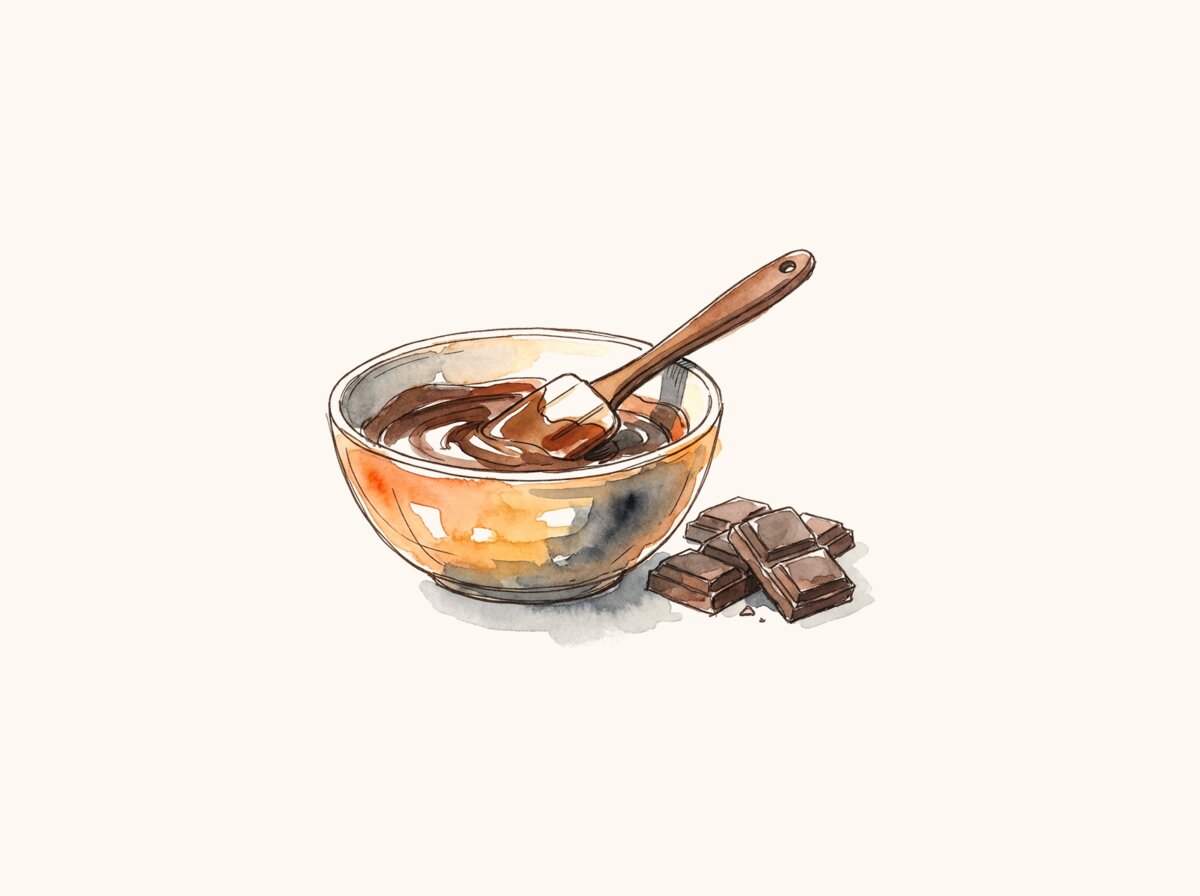
Tempering Chocolate
The physics of snap and shine.
Melt chocolate and let it set and you get something dull, soft and streaky. Temper it, steering the cocoa butter into the right crystal form, and you get gloss, snap, and chocolate that melts in the mouth instead of the hand.
Why it works
Cocoa butter can crystallise six different ways; only Form V gives gloss, snap and a clean melt.
Cocoa butter is polymorphic: its fat solidifies into six crystal structures, each with a different melting point, and only Form V, melting around 34 °C, makes chocolate glossy, snappy and quick to melt on the tongue. Tempering is crystal management. Melt everything to erase all forms, 45–50 °C for dark, cool while introducing Form V seeds, then work at 31–32 °C where Form V survives and the weaker forms can't set. Untempered chocolate blooms, because unstable crystals let fat migrate to the surface as grey streaks.
Chocolate melting just below body temperature is the whole eating experience: solid in the hand, liquid on the tongue. Form V is the only crystal that threads that needle.
The moves
- 1
Melt clean
Chop evenly, melt gently to 45–50 °C for dark, over a bain-marie or in short microwave bursts. Every existing crystal has to go, and keep water away, because one drop seizes the batch.
- 2
Seed it
Off the heat, stir in a third of unmelted, already-tempered chocolate. It cools the batch and donates millions of ready-made Form V crystals.
- 3
Land on temperature
Stir down to 31–32 °C for dark, 29–30 for milk, 28–29 for white. A probe thermometer turns this from art into arithmetic.
- 4
Test before you commit
Dip a knife tip. Properly tempered chocolate sets glossy at room temperature within about five minutes. Streaky or soft, re-melt and seed again; nothing is lost.
Save yourself
A drop of water in the bowl
Water makes chocolate seize into paste instantly. Dry bowls, dry spoons, and steam counts as water.
Rushing past the working temperature
Two degrees too warm quietly erases your Form V seeds and the bar sets dull. The thermometer is the recipe.
Setting it in the fridge to help
Fast cold sets the wrong crystals and invites bloom later. Cool room temperature, patience, shine.
Pop quiz
Why does untempered chocolate turn grey and streaky?