Raising a Starter
A pet made of flour and water.
A starter is a small ecosystem you keep on the counter: wild yeast for lift, friendly bacteria for flavour. Feed it, watch it, and in a week or two it raises real bread with no shop yeast anywhere.
Why it works
Flour carries wild yeast and lactic acid bacteria; regular feeding turns them into a stable, bread-raising culture.
Mix flour and water and the microbes already living on the grain wake up. Over days of feeding a partnership settles in: wild yeasts produce the CO₂ that lifts the loaf, and lactic acid bacteria produce the acids that give sourdough its tang and fend off unwanted microbes. A starter is ready when it behaves predictably. Fed, it doubles within hours, smells pleasantly yogurty-sour, and sits full of bubbles at its peak.
The bacterium behind classic tangy sourdough is named after a city: Fructilactobacillus sanfranciscensis, first isolated from San Francisco sourdough.
The moves
- 1
Day one: just mix
Equal weights flour and water, 50 g each, in a jar, stirred smooth. Rye or wholegrain kickstarts things, because more microbes live on the outer grain.
- 2
Feed on rhythm
Once a day: keep 50 g of the culture, discard the rest, stir in 50 g fresh flour and 50 g water. Same time each day; microbes love routine.
- 3
Mark the rise
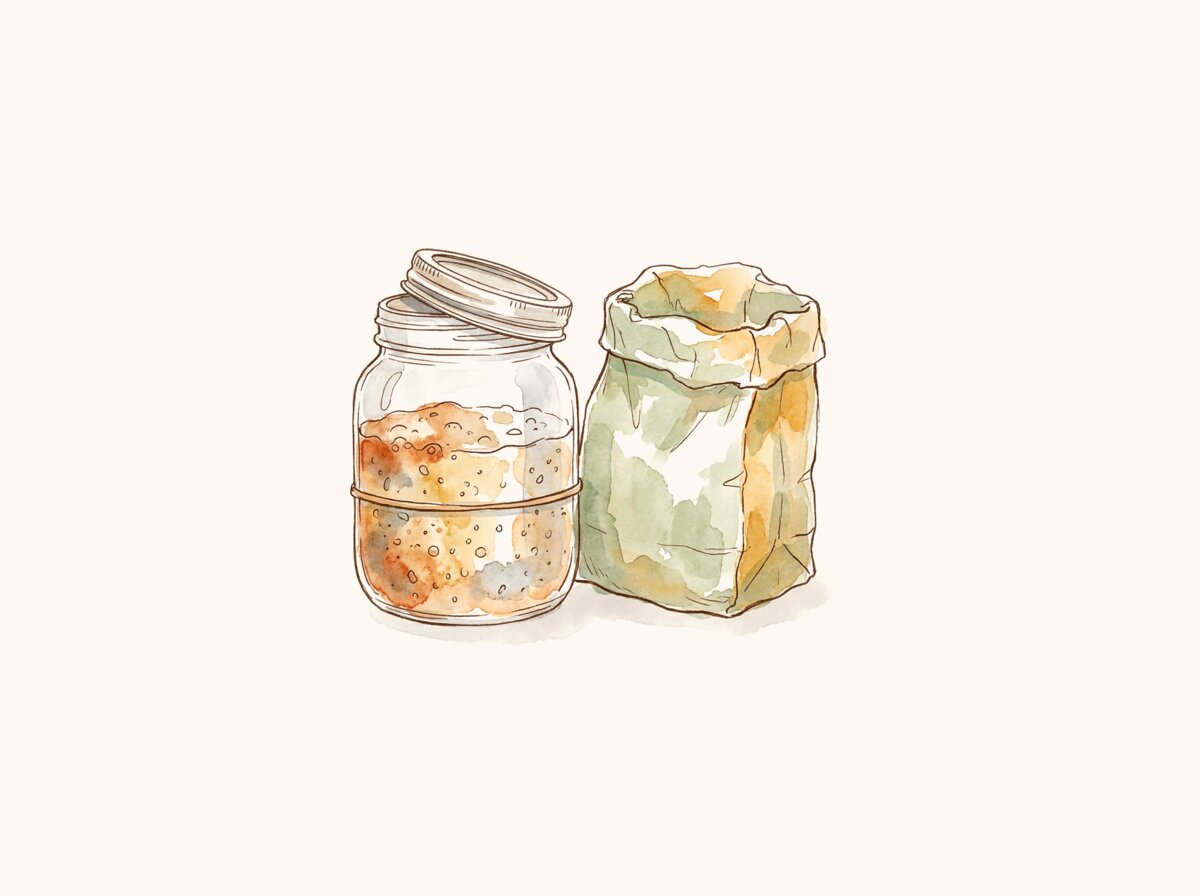
A rubber band at the surface line turns the jar into an instrument. You're watching for a confident double within 4–8 hours of feeding.
- 4
Ride out the lull
Days 3–5 often go quiet after a lively start, as the first bloom dies off and the real culture establishes. Keep feeding. This is where most people give up.
- 5
Bake at the peak
Use the starter when it's domed and full of bubbles, just before it starts sinking back. Peak starter is peak lifting power.
Save yourself
Giving up during the day-4 slump
The quiet patch is a changing of the guard, not a death. Two more days of feeding almost always brings it roaring back.
Keeping it somewhere cold
Wild yeast likes 24–28 °C. A cold kitchen doesn't kill a starter, it just doubles every timing. Find the warm spot above the fridge.
Treating discard as sacred
Discarding is portion control, not waste. Without it you'd be feeding a bathtub of starter by Friday. Or make pancakes with it.
Pop quiz
How do you know a starter is actually ready to raise bread?