Salting & Brining
The 40-minute rule.
Salt is the only seasoning that changes the structure of food, not just the taste. When you add it matters as much as how much, and the rule is simpler than it sounds.
Why it works
Salt needs time to travel. Give it 40 minutes, or use it right before the heat.
Salt on meat first pulls moisture to the surface, then dissolves into it and diffuses inward, seasoning deeply and dissolving some of the muscle protein myosin, which helps the meat hold its juices when heated. That takes time. Salt at least 40 minutes ahead, so the surface re-dries as the salt moves in, or salt just as it hits the pan. The middle window leaves the surface wet exactly when you need it dry.
About 1% salt by weight, 10 g per kilo, is what most professional kitchens season to. Weigh it once and you'll recognise the amount by hand afterwards.
The moves
- 1
Weigh, once
Roughly 1% of the food's weight is a reliable baseline. Weigh it once to calibrate your pinch, then use the pinch.
- 2
Salt from altitude
Sprinkling from high up scatters crystals evenly instead of landing in salty islands.
- 3
Mind the clock
Either 40 minutes ahead or immediately before. Never the middle, which is peak wet surface.
- 4
Dry-brine the big stuff
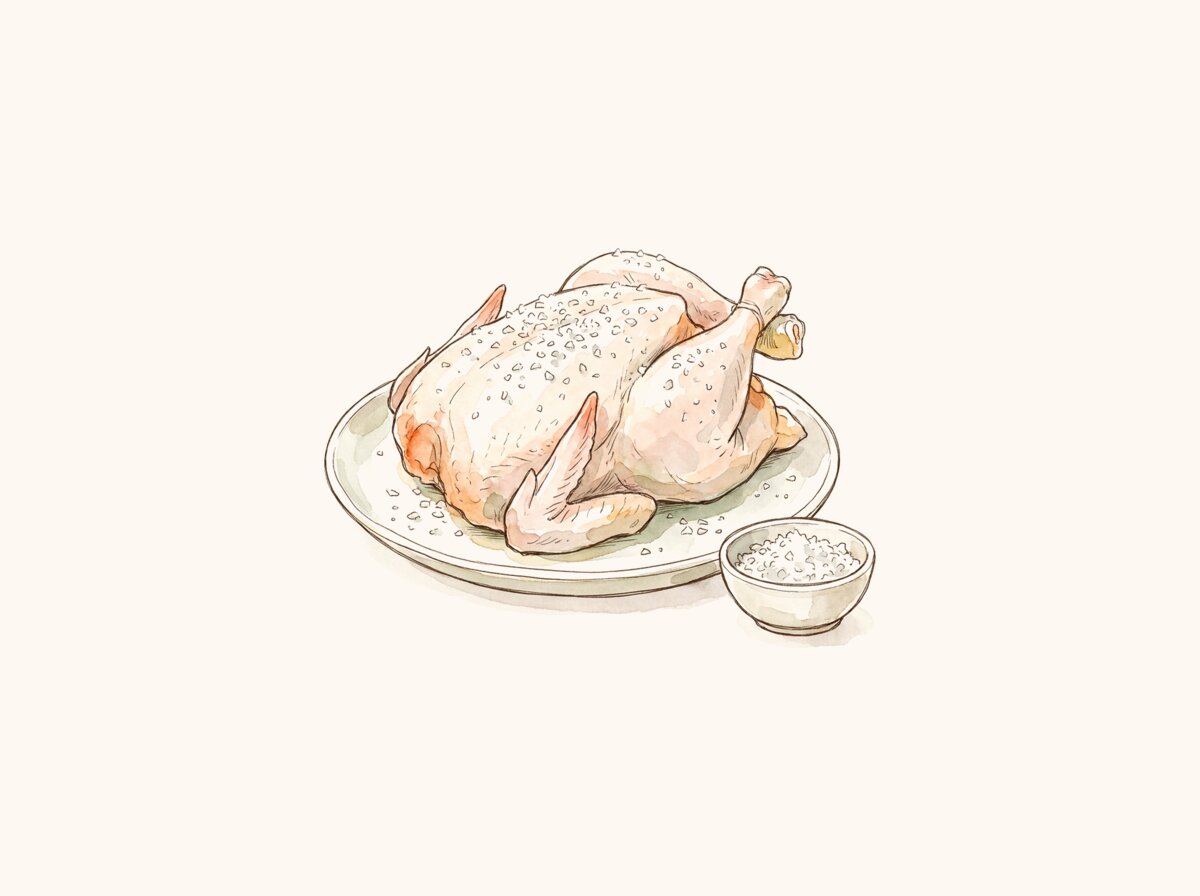
Chicken and roasts: salt, then rest uncovered in the fridge overnight. Deep seasoning, and skin that crisps like glass.
Save yourself
Salting 15 minutes ahead
The worst possible timing: the moisture is out but hasn't gone back in. Go long or go immediate.
Seasoning only the finished dish
Surface salt tastes salty; dissolved salt tastes seasoned. They aren't the same thing.
Fearing salt more than blandness
Most home cooking is undersalted. One percent by weight isn't daring, it's just correct.
Pop quiz
You forgot to salt the steak ahead of time. Best move?