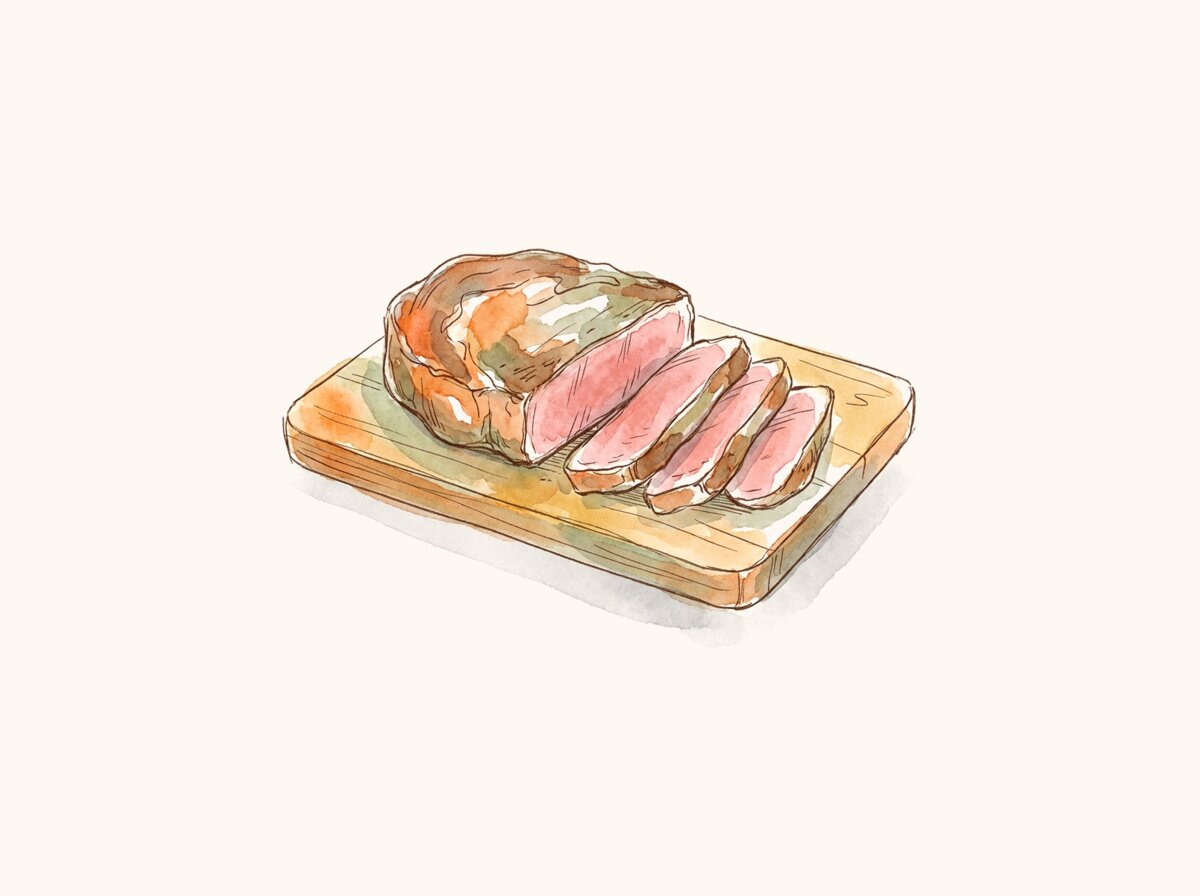
Reverse Searing
Steakhouse steak, backwards.
The classic method, hard sear then finish in the oven, fights physics the whole way. Flip the order and a thick steak comes out rosy edge to edge, with a crust that forms in seconds.
Hot pan the whole way
Reverse sear
Same steak, same target temperature. The grey band is meat that overshot while heat fought its way inward.
Why it works
Gentle heat cooks the inside evenly first; a screaming-hot pan then builds crust in seconds.
In a 120 °C oven the inside of a thick steak creeps up slowly and evenly, with no thick grey band of overcooked meat under the surface. The oven also dries the surface out. When the steak finally meets a blistering pan, Maillard gets a dry, pre-warmed head start and the crust forms before the inside can overcook. Gentle heating leaves barely any carryover, so the timing turns forgiving.
The grey band in a pan-only steak is meat that overshot its target while heat fought its way to the centre.
The moves
- 1
Go thick
3 cm or more. Thin steaks are done before the method has anything to offer.
- 2
Salt early, rack it
Salt generously and set the steak on a wire rack. Air circulation dries the surface, and that dry surface is the crust.
- 3
Low and slow
Into a 100–120 °C oven with a probe thermometer, until 10–15 °C below your target, about 48–50 °C for medium-rare.
- 4
Sear like you mean it
Ripping-hot pan, a thin film of high-smoke-point oil, 45–60 seconds a side. The surface is dry and warm, so crust happens fast.
- 5
Serve almost immediately
The gentle oven already left the fibres relaxed, so a minute or two of rest is plenty.
Save yourself
Using a thin supermarket steak
Save the method for thick cuts. Pan-fry thin steaks hard and fast instead.
Skipping the thermometer
The whole method is temperature-driven. A probe costs less than one ruined ribeye.
A merely warm-ish pan for the sear
You want brief and brutal. A timid pan just keeps cooking the inside you carefully protected.
Pop quiz
Why does a reverse-seared steak crust up so fast at the end?