Resting & Carryover
The hardest step is waiting.
Meat keeps cooking after it leaves the heat, and cutting too soon pours the good part onto the board. The fix costs nothing but patience.
Why it works
The inside keeps heating after the pan, and hot juices need a minute to settle.
Heat keeps travelling from the hot exterior toward the centre after cooking stops, and carryover can add 3–8 °C, so always pull meat early. Meanwhile the hot muscle fibres are contracted and their juices thin and mobile. A short rest lets the fibres relax and the juices thicken slightly, so they stay in the slice instead of flooding the board.
Pull a large roast a full 5–8 °C under target. The centre hasn't heard that the oven is off.
The moves
- 1
Pull early
Off the heat 3–5 °C before target for steaks, 5–8 °C for big roasts. Carryover finishes the job for free.
- 2
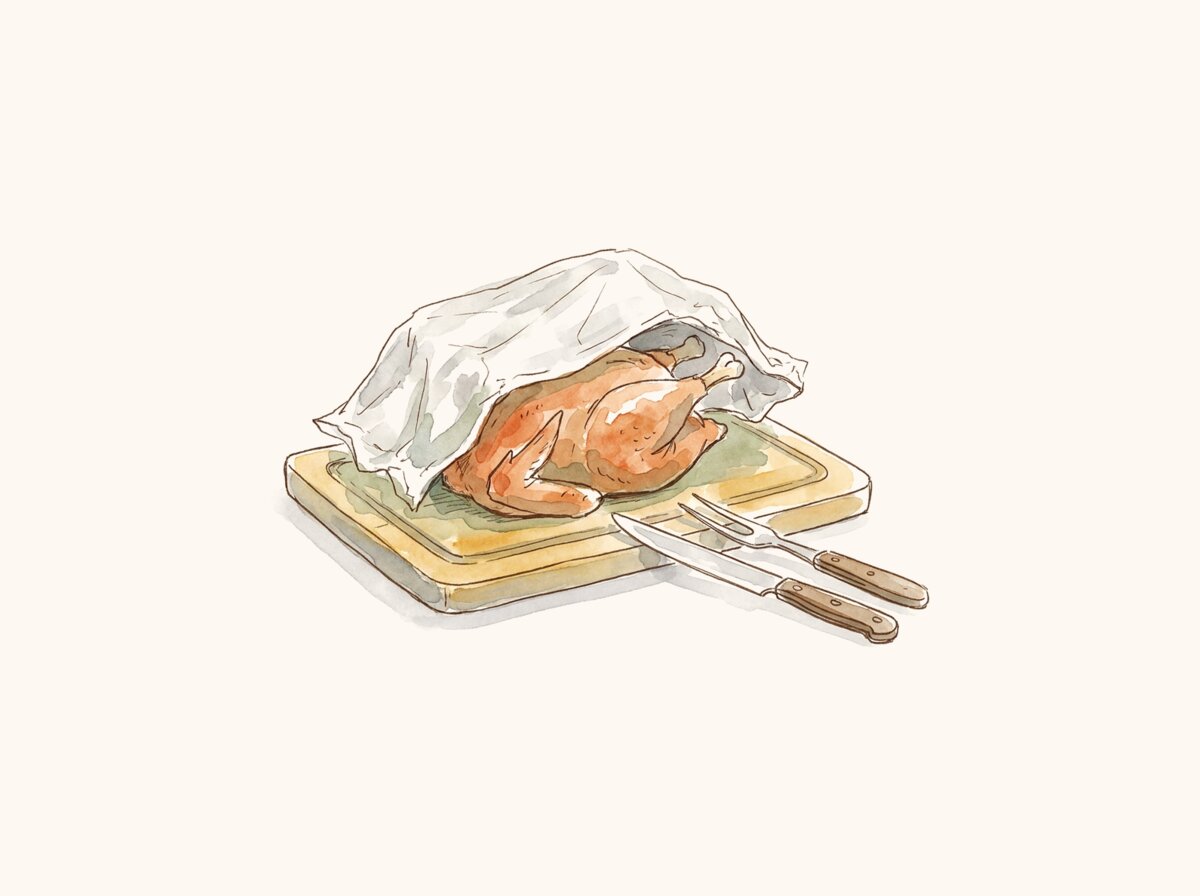
Tent, loosely
A loose sheet of foil keeps the warmth without steaming your crust soggy. Loose is the operative word.
- 3
Wait it out
Five to ten minutes for a steak, twenty to thirty for a roast. Make the sauce. Don't cut it "just to check".
- 4
Slice across the grain
Cut perpendicular to the muscle fibres. Shorter fibres, more tender bite.
Save yourself
Cutting in immediately for a peek
That flood on the board is flavour leaving the meat. Two more minutes.
Wrapping tightly in foil
A tight wrap steams the crust you worked for. Tent it loose.
Resting a thin cut forever
A thin steak just goes cold. Scale the rest to the mass.
Pop quiz
Your roast reads 3 °C under target in the oven. What now?