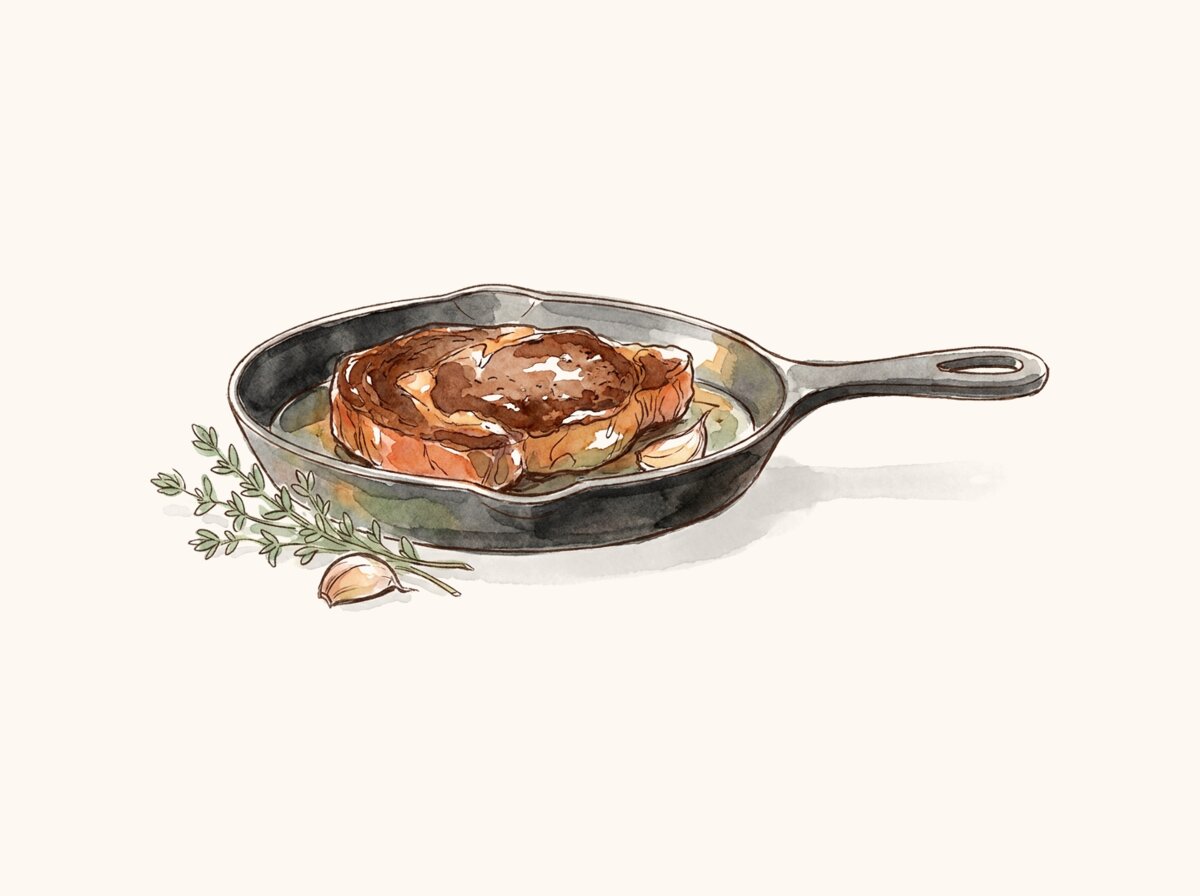
The Maillard Reaction
Why brown food tastes good.
Seared steak, bread crust, roasted coffee, browned butter: one reaction connects them all. Trigger it on purpose and everything you cook gets deeper and more savoury.
Slide the pan temperature. Browning only starts once the surface can pass 140 °C, which is why a wet steak just steams.
Why it works
Above roughly 140 °C, amino acids and sugars rearrange into hundreds of new flavour compounds.
The Maillard reaction needs two things: heat above about 140 °C and a dry surface. Water is the enemy. While the surface is wet, evaporation pins it at 100 °C and nothing browns. Pat food dry, get the pan properly hot, and give everything room, because a crowded pan traps steam and steam keeps every surface wet.
Caramelisation is a different reaction: sugars alone, from about 160 °C. Your steak crust is Maillard, the top of a crème brûlée is caramel.
The moves
- 1
Dry the surface
Pat with paper towels, and really pat. A wet surface is stuck at 100 °C until the water has gone, and browning starts around 140 °C.
- 2
Heat the pan first
A drop of water should skitter and vanish before the food goes in. A cold start steams food in its own juices.
- 3
Give it room
Crowded food steams its neighbours. Cook in batches; the second batch will thank the first.
- 4
Leave it alone
Browning needs sustained contact. Let the crust build until the food releases willingly. If it's sticking, it isn't ready.
- 5
Listen
A steady sizzle is browning. Violent spitting is too hot, a quiet murmur means steam. Your ears are a thermometer.
Save yourself
Flipping every twenty seconds
One flip, maybe two. Contact time is what builds crust.
Searing meat straight from a wet marinade
Wipe it off first. The water steams and the sugar burns. Reduce the marinade separately into a glaze.
Judging heat by the stove dial
Judge by the pan: the water-drop test before, the sound of the sizzle during.
Pop quiz
Why won't a wet steak brown?