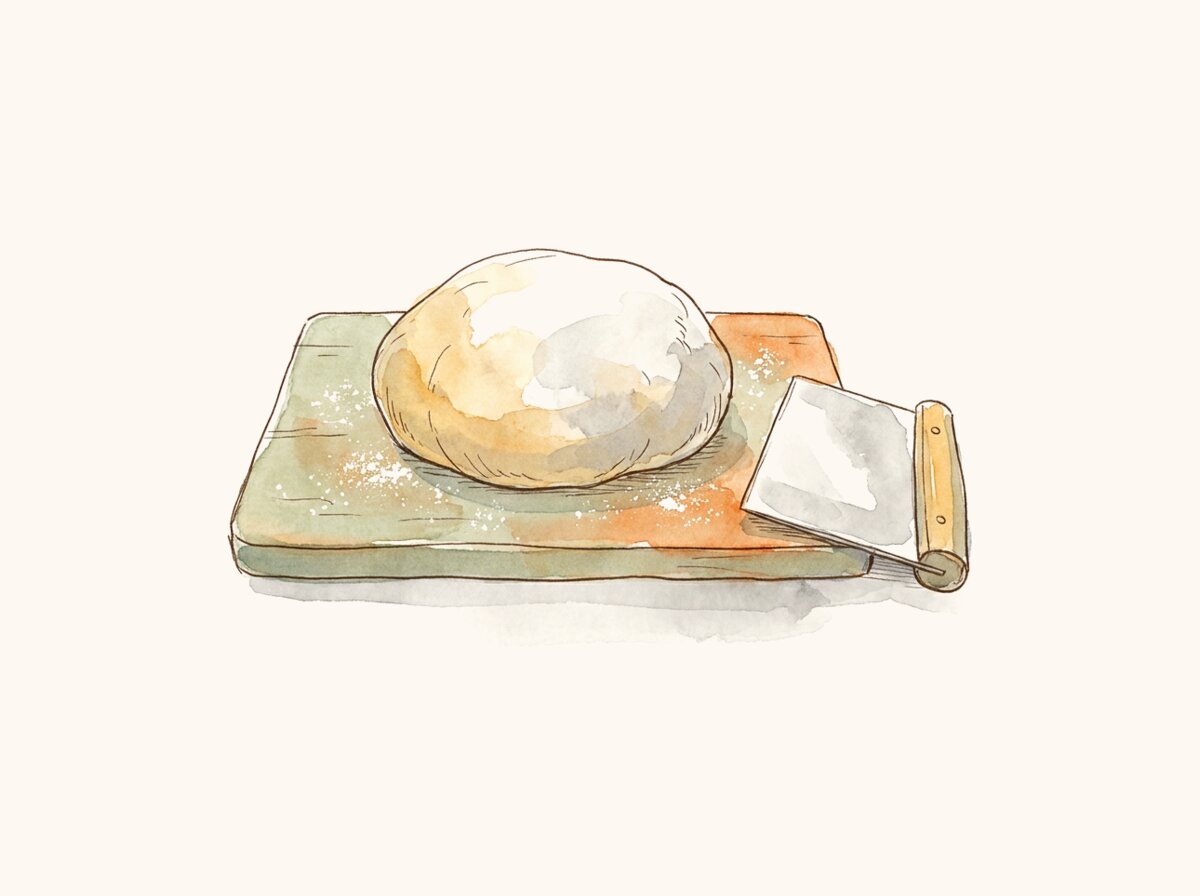
Kneading & Gluten
Stretch, don't tear.
Bread rises because you built it a skeleton. Understanding gluten is the difference between dough you fight and dough that cooperates, and it explains why pastry recipes beg you to do the opposite.
Why it works
Kneading aligns two wheat proteins into an elastic net that traps gas.
Mix flour with water and two proteins, glutenin and gliadin, link up into gluten. Kneading organises that tangle into aligned, elastic sheets strong enough to trap the CO₂ your yeast exhales, which is what makes bread rise instead of leak. Time does the same work for free: rest the dough 20 minutes mid-mix, which bakers call autolyse, and it half-kneads itself.
Pastry recipes say "don't overwork the dough" for the same reason bread recipes say knead well. Gluten is the goal in bread and the enemy in pie.
The moves
- 1
Mix shaggy, then walk away
Combine flour and water until no dry spots remain, then rest 20–30 minutes. Gluten starts organising itself without you.
- 2
Knead with intent
Push, fold, quarter-turn, repeat, about eight minutes by hand. The dough goes from lumpy to smooth and alive under your palms.
- 3
The windowpane test
Stretch a small piece between your fingers. If it thins to translucent without tearing, the network is built. If it rips, keep going.
- 4
Let time finish
A slow rise keeps building structure and flavour. Cold overnight in the fridge is the least effort for the most reward.
Save yourself
Adding flour every time it sticks
Sticky is normal early on. Extra flour means dense bread, and a plastic scraper beats more flour.
Kneading pie dough like bread dough
In pastry, gluten is the enemy. Handle those doughs as little as humanly possible.
Judging by the clock, not the dough
Windowpane, not stopwatch. Flour, humidity and your hands all change the timing.
Pop quiz
What does resting the dough (autolyse) actually do?