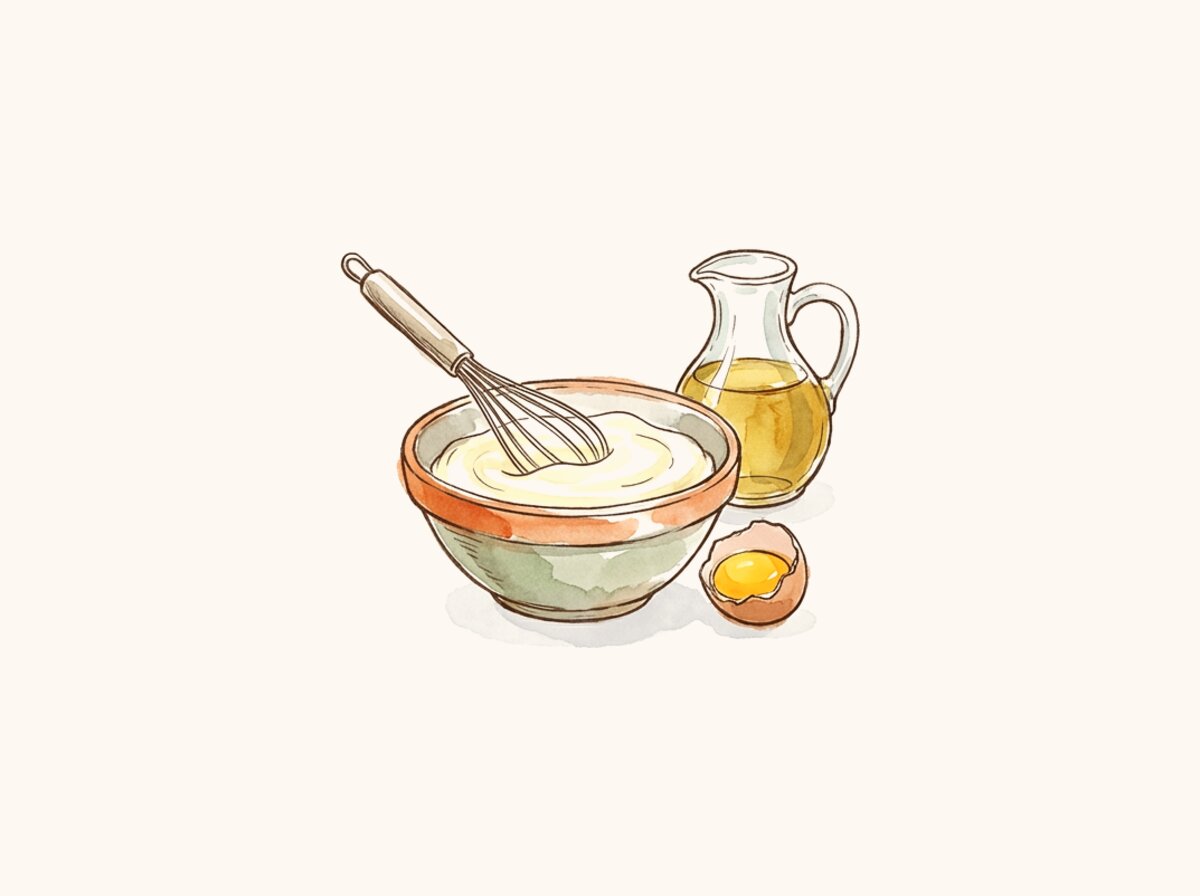
Emulsions
Making oil and water friends.
Mayonnaise, hollandaise, vinaigrette, cacio e pepe, butter sauces: half the great sauces are the same trick, convincing oil and water to hold together.
Oil and vinegar, politely ignoring each other
Why it works
An emulsifier coats microscopic oil droplets so they stop finding each other.
Oil and water refuse to mix until you break the oil into droplets small enough, and coat them well enough, that they can't merge back together. Whisking supplies the breaking force and an emulsifier supplies the coat. Egg yolk's lecithin is the classic one for mayonnaise and hollandaise, mustard stabilises a vinaigrette, and starchy pasta water is what lets butter and cheese become a sauce instead of a greasy puddle.
A broken mayonnaise isn't dead. Whisk the broken batch, drop by drop, into a teaspoon of water or a fresh yolk.
The moves
- 1
Start with the coat
Yolk and a spoon of mustard in the bowl, plus a splash of water or lemon. The emulsifiers must be waiting when the oil arrives.
- 2
Drops, then a thread
The first oil goes in drop by drop while you whisk. That's where emulsions live or die. Once it visibly thickens, graduate to a thin stream.
- 3
Whisk with intent
Shear force is what shatters oil into micro-droplets. Small droplets plus a good coating gives cream instead of slick.
- 4
Season and loosen
Salt, acid, and a teaspoon of water if it tightens up too much. Water is the emulsion's native habitat.
Save yourself
Pouring the oil in one confident glug
The emulsifier gets overwhelmed and the whole thing splits. Drops first, always.
Panicking at a broken sauce
Fresh yolk or a spoon of water in a clean bowl, then whisk the broken batch back in gradually.
Draining every drop of pasta water
That cloudy, starchy water emulsifies butter and cheese into silk. Always save a cup.
Pop quiz
What is the mustard actually doing in your vinaigrette?