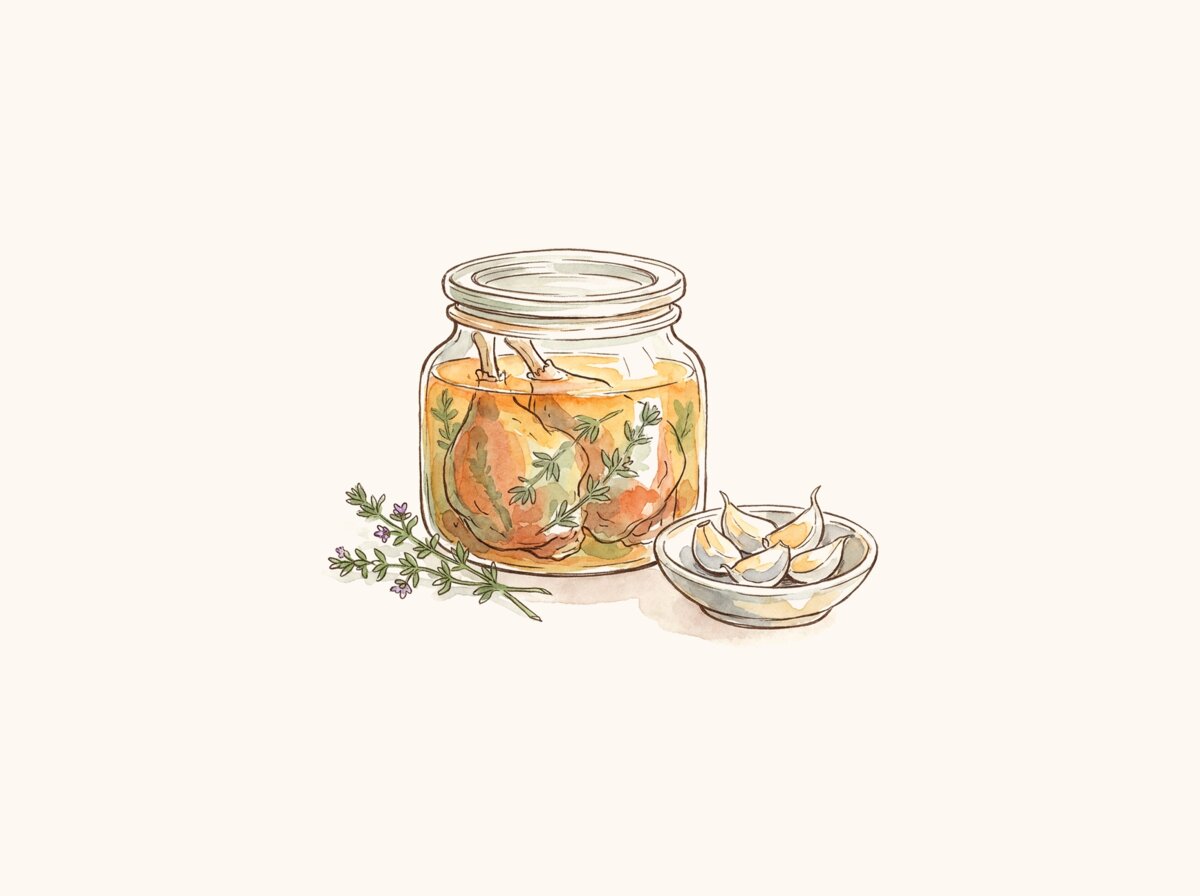
Confit
Fat is a very patient oven.
Duck legs sunk in their own fat for four hours come out falling off the bone and, improbably, not greasy. Confit started as a way to keep meat through a winter without a fridge. It outlived the fridge because nothing else gives you that texture.
Why it works
Fat carries no water, so it'll hold 85 °C all day, melting collagen without ever boiling or steaming the surface.
Water is stuck at 100 °C. Oil sits wherever you ask it to below its smoke point, which makes it a far finer instrument. Held around 85 °C, fat melts collagen at the same unhurried pace a braise does, but the meat never meets a bubble or a puff of steam, so it stays whole instead of shredding. Very little fat gets inside: the meat is full of water, water and fat refuse to mix, and the piece poaches rather than fries. The overnight salt cure does separate work, pulling moisture off the surface and seasoning the whole thickness before the heat starts.
Sealed under a lid of set fat, no air and no water, confit kept for months in a cellar crock. One of the oldest preservation tricks still worth doing for the taste alone.
The moves
- 1
Cure it overnight
Salt at about 2% of the meat's weight, with thyme, garlic, bay and cracked pepper. Twelve to twenty-four hours in the fridge, then rinse and dry it thoroughly.
- 2
Submerge completely
Duck fat, lard or plain olive oil, deep enough to cover. Anything standing proud of the surface dries out instead of cooking.
- 3
Hold it at a whisper
Oven at 90–100 °C, or the hob setting that gives one lazy bubble every few seconds. Duck legs four hours, pork belly two, whole garlic cloves forty minutes.
- 4
Test with the bone, not a timer
It's ready when the bone twists free against almost no resistance. Every leg is a different size; the bone knows and the clock doesn't.
- 5
Store under the fat, crisp it later
Cool it in the fat and refrigerate it submerged. Crisp the skin in a dry hot pan just before serving. Shattering skin against collapsing meat is the whole point.
Save yourself
Letting the fat get properly hot
Past about 120 °C you're deep-frying: the outside toughens and the inside never gets its slow hours. A steady sizzle means turn it down.
Skipping the cure to save a day
Fat carries almost no seasoning inward, so uncured confit is bland right through the middle, and finishing salt only fixes the outside.
Pouring the fat away afterwards
Strained and chilled it keeps for months and gets better each time. The dark jelly at the bottom of the jar is concentrated stock, and it goes in the sauce.
Pop quiz
Why doesn't confit come out greasy?