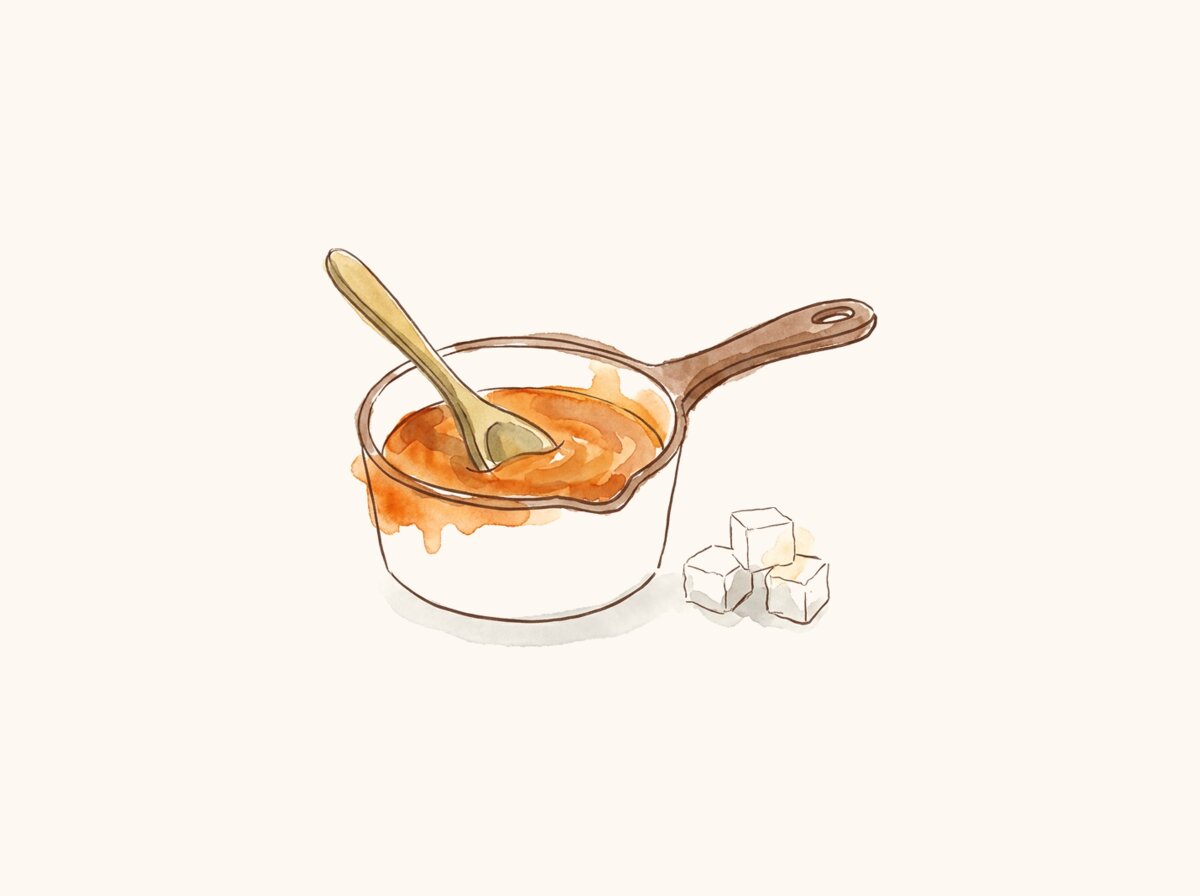
Caramel & Sugar Stages
Sugar's second act.
Heat sugar far enough past sweet and it turns into something else: bitter, nutty, complex. Caramel has a reputation for drama, but it asks two things. Don't stir, and don't look away.
Why it works
Above about 160 °C, sugar molecules break apart and rebuild into hundreds of new flavour compounds.
Caramelisation is sugar's own transformation, with no proteins involved, which is what separates it from Maillard. As sucrose passes 160 °C it fragments and recombines into compounds that are bitter, nutty, buttery and fruity at once, and colour is your thermometer, from straw to amber to mahogany. The enemy is crystallisation: one stray sugar crystal on the pan wall can seed a chain reaction that turns the whole batch grainy. That's why caramel is swirled, never stirred.
Colour deepens fast at the end because the reactions accelerate themselves. The ten seconds between perfect amber and burnt is real, so pull it a shade early and let the pan's heat finish the job.
The moves
- 1
Wet start
Sugar plus a splash of water in a clean, heavy pan. The water buys you evenness while everything dissolves, then boils away.
- 2
Hands off
Once it boils, no spoons. Stirring throws syrup onto the pan walls where it crystallises and seeds the batch. Swirl the whole pan instead.
- 3
Watch the colour
Straw, gold, amber, deep amber. Amber is flavour, mahogany is bitter, black is a soaking project. Take it off one shade before you think it's done.
- 4
Add liquids with respect
Cream or butter goes in warm, off the heat, in stages. Cold liquid hitting 170 °C sugar erupts.
Save yourself
Stirring to help it along
Stirring is how grainy caramel happens. Swirl the pan; the sugar needs to be left alone.
Answering the door at amber
The final stretch moves in seconds, not minutes. Caramel is a stay-in-the-kitchen job.
Pouring in fridge-cold cream
Warm the cream first and add it in stages. Cold cream makes the caramel erupt and seize.
Pop quiz
Why must caramel be swirled instead of stirred?