Batter & The Crisp Coat
A crust is water leaving in a hurry.
Deep-frying looks violent and is mostly plumbing. The bubbles are water leaving the food, and the crust is what's left once it's gone. Every rule of frying follows from that.
Why it works
Hot oil boils water out of the surface, and the dried, set layer left behind is the crunch.
Oil at 180 °C is far past the boiling point of water, so the instant food goes in, surface water flashes to steam. That's the roar, and the outward rush is also what keeps oil from soaking in. As the surface dries it sets: starch gelatinises, then dehydrates into a rigid, glassy layer while Maillard browning colours it. Cooler oil means a lazier boil, a longer soak and a greasy result; hotter oil sets and burns the crust before the inside cooks. Batter is that crust engineered on purpose. Cornflour and rice flour set brittle, wheat gluten sets chewy, and alcohol or carbonated water cut both the water and the gluten so the coat dries faster and shatters instead of bending.
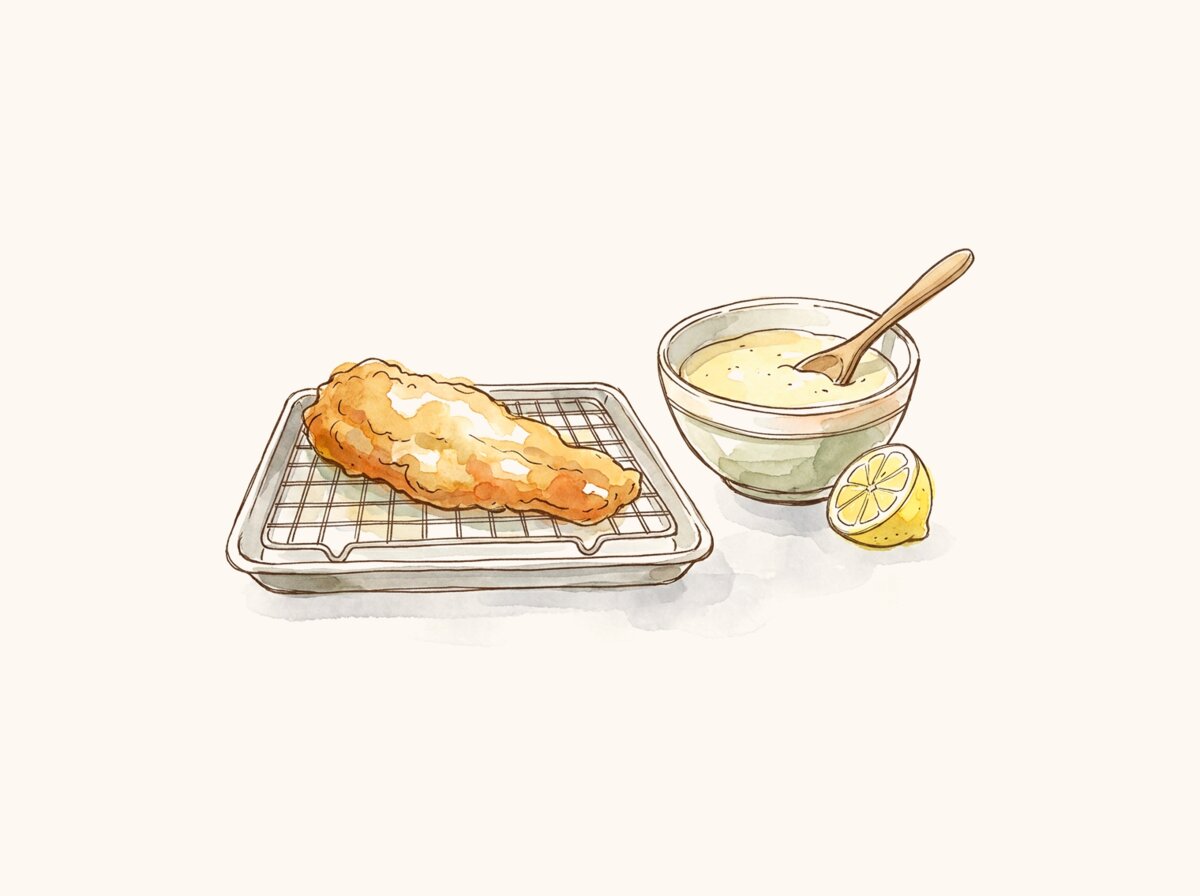
Most of the oil a fried thing absorbs goes in while it cools, not while it fries. Once the steam stops pushing outward the crust draws in whatever oil is clinging to it, which is why fried food drains on a rack and never on a plate.
The moves
- 1
Hold the temperature
175–190 °C for almost everything. A deep, heavy pan no more than half full, and remember that every handful you add drops the oil 15 to 20 °C.
- 2
Dry the food, then coat it
A wet surface thins the batter and spits. Pat dry, dust with plain flour or cornflour, then dip.
- 3
Build a brittle batter
Cut the flour with cornflour or rice flour, mix with ice-cold sparkling water or half beer, and stop while it's still lumpy. A smooth, rested batter has developed its gluten and will fry chewy.
- 4
Listen for the finish
Loud and violent means water is still leaving. When it settles to a gentle crackle, the surface is dry and the crust has set.
- 5
Double-fry the starchy things
Chips and fried chicken go in once at 160 °C to cook through, rest until cool, then once at 190 °C to blister. The rest in between is what makes the second fry work.
Save yourself
Crowding the pan
The temperature collapses and everything poaches in fat. Fry a handful at a time and let the oil climb back between batches.
Draining on kitchen paper on a plate
The underside sits in its own steam and goes soft within a minute. Use a wire rack, and salt while it's still hot.
Letting the batter rest like a pancake mix
Rested batter is developed batter. Mix it at the last second, keep it ice cold, and leave the lumps alone.
Pop quiz
Why does food fried at too low a temperature come out greasy?